Printed Rugs

How Digital Printing Transforms Rugs

, by Eslam Hisham, 3 min reading time

Discover how printed rug technology is changing the world of floor design. Learn about digital printing methods, benefits, and where these rugs are used today.

Printed Rug Technology: The Modern Revolution in Floor Design

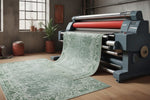
Example of a digitally printed rug with photographic detail

Printed rugs use modern printing processes to transfer artwork directly onto carpet surfaces. Unlike hand-tufting or traditional weaving, printed solutions rely on dye-sublimation, inkjet printing, and industrial finishing lines to create highly detailed patterns and photographic imagery. These methods open up near-limitless visual options for homes, hotels, exhibitions, and branded spaces.

How Printed Rugs Are Made

Common modern approaches include:

  • Dye sublimation: An image is printed on transfer paper and then heat-pressed so the dye sublimes into the polyester surface. This method produces vivid, permanent colors on synthetic bases. (See: Dye-sublimation printing - Wikipedia.)
  • Digital inkjet printing: Large-format inkjet heads deposit inks directly onto a textile backing. Industrial lines can include steaming, washing, and heat-setting to increase durability. Industry suppliers and installers describe large-scale digital installations. (Examples: M2 Carpets - digital rug products, Prinwork - digital rug printing.)
  • Hybrid finishing: After printing, processes like lamination, anti-slip backing, and edge overlocking are added for performance and longevity. See practical product descriptions from manufacturers. (Example: Ferahnur Rugs - digital print carpets.)

Early and Industrial Developments

Advances in carpet printing have a history. Early rotary and injection-based systems improved repeatability and production speed. Modern industrial print lines from specialized equipment makers enable wide-format production and integrated finishing stages, these are used by companies producing custom and large-format printed carpets. For press coverage and technical background on industrial lines, see reporting and product announcements. (See: Texintel, TextileWeb.)

Frequently Asked Questions — Printed Rug Benefits

Q: Why are printed rugs good for customization and creative designs?
A: Printed rugs allow precise reproduction of any artwork, photograph, logo or pattern, including photographic-quality prints. Digital processes remove the limits of repeat patterns and let makers produce one-off or short-run custom designs quickly. See examples from M2 Carpets and Ferahnur Rugs.
Q: Do printed rugs offer faster production compared with traditional methods?
A: Yes. Digital printing cuts out long screen- or dye-preparation steps used in older methods, enabling faster setup and print-on-demand. See more on TextileWeb.
Q: Are printed rugs consistent in quality?
A: Digital printing gives high fidelity and repeatability: the same file printed repeatedly produces nearly identical results. Industrial finishing (washing, steaming, heat-setting) further secures color and durability. Learn more at Prinwork.
Q: Where are printed rugs commonly used?
A: Printed rugs suit residential interiors, hotels, exhibitions, retail pop-ups, and event branding because of their graphic possibilities and short lead times. For applications, see Ferahnur Rugs.

Sources and Further Reading

Close-up detail of printed rug texture

Notes for Buyers and Designers

  • Close-up photos of the print and edge finishing.
  • Information on material (polyester, wool blend, etc.) and backing type.
  • Details on finish steps such as washing, steaming, and anti-slip backing.

Check our printed rug collection from here.


Tags

Leave a comment

Leave a comment

Blog posts